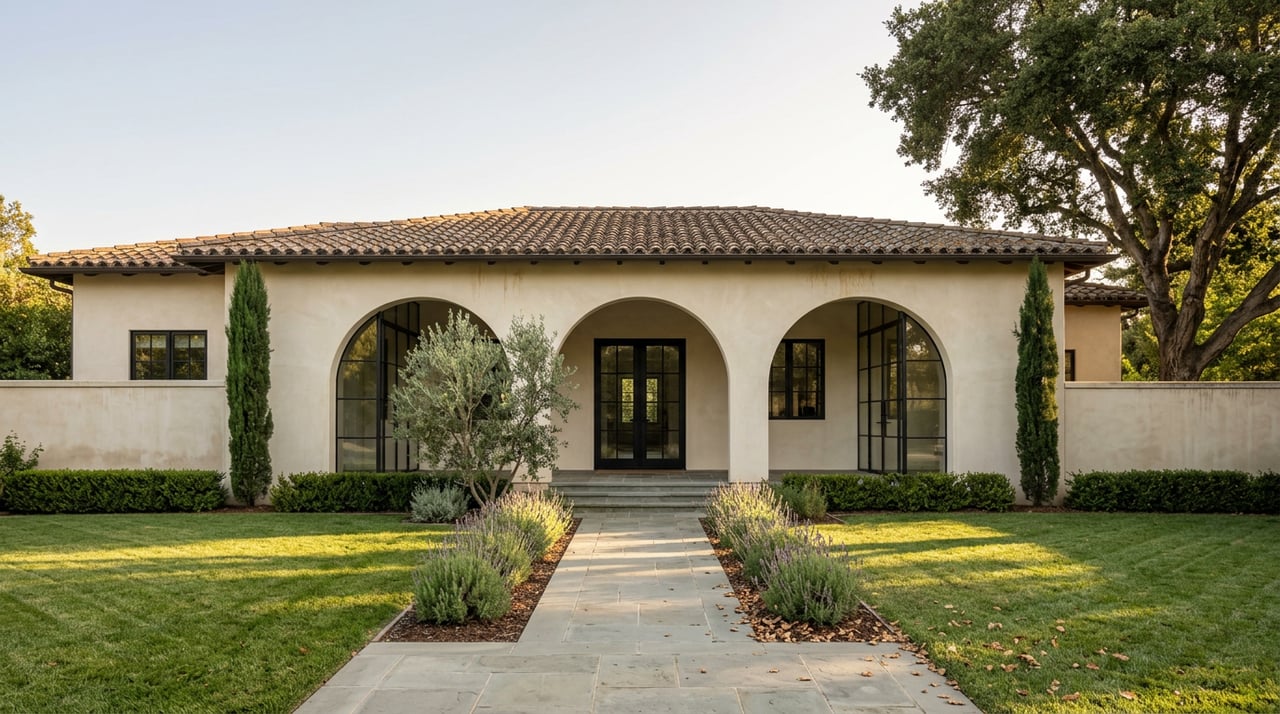
Arcadia Is Adding Hundreds of New Homes. Almost None of Them Are Houses.
September 3, 2026
September 3, 2026
At the 2024 groundbreaking for a 319-unit apartment complex a few blocks from Arcadia's Metro station, Mayor April Verlato called the city "a Community of Homes." She meant it as a description of the city's housing stock. It also describes, without quite meaning to, the split that's currently defining Arcadia's market: the city is building homes right now, more of them at once than it has in years, and almost none of them are the kind of home the typical Arcadia house hunter is comparing on a spreadsheet.
If you've spent any time researching Arcadia this year, you've likely run into two facts that seem to contradict each other. The first is that downtown is in the middle of a genuine construction wave, with hundreds of new apartment units moving through approvals or under construction within walking distance of the Gold Line. The second is that single-family home prices keep setting records, with no sign the pipeline is cooling anything down. Both are true at the same time, and the reason has less to do with supply and demand than with the zoning map sitting underneath both markets.
Three projects account for most of the recent activity, and all three sit within a few blocks of each other near downtown.
Alexan Azalea, developed by Trammell Crow Residential at 150 N. Santa Anita Ave., broke ground in May 2024 and is expected to open in 2026. The project calls for 319 apartments, 26 of them set aside as affordable units, organized around a paseo that connects to the Metro station.
A few blocks east, the Derby restaurant at 233 E. Huntington Drive, a steakhouse that has operated on that site since 1922, is being rebuilt as part of a mixed-use project that pairs the returning restaurant with 214 residential units and 4,700 square feet of additional restaurant and cafe space.
Most recently, a third project, Alexan Arroyo at 325 N. Santa Anita Ave., has moved through city approvals using California's Density Bonus Law, which lets a developer build more units than local zoning would otherwise allow in exchange for setting a share aside as affordable housing. City officials noted the project's affordable units are being built as studios exclusively, a concession available under the state program.
Stack the three together and Arcadia is on track to add somewhere north of 700 residential units within a half mile of downtown. That's a real supply increase by any measure. It should, in theory, make house hunting easier.
Here's the part that gets lost in coverage of the construction: none of those 700-plus units are single-family houses, and the zoning code makes sure they can't become any.
A zoning analysis of Arcadia's map shows the R-1/7500 district, the city's baseline low-density single-family zone, covering roughly 1,846 acres on its own, by far the largest classification in the city. Layer the R-0 Very Low Density zone and the R-M Residential Mountainous zone on top of that, and the acreage devoted to single-family-only land use grows further still.
| Zoning tier | Approximate acreage | What can be built |
|---|---|---|
| R-1/7500 (base single-family) | ~1,846 acres | Detached single-family homes only |
| R-3 High Density Residential | ~420 acres | Multifamily, up to 30 units/acre |
| Downtown Mixed Use (DMU) | ~75 acres | Ground-floor commercial, residential above |
Add the R-3 and DMU figures together and the land legally available for anything resembling Alexan Azalea or the Derby project comes to under 500 acres, before counting the additional R-0 and R-M acreage layered onto the single-family side. The city's own development code spells out the intent directly: the R-M zone exists for detached single-family units on estate-type lots in the hillside and valley areas, and the R-0 zone exists for detached single-family units on large lots. Neither was written with an apartment complex in mind.
That's the mechanism. Arcadia isn't failing to build. It's building inside a container that was never going to touch single-family inventory, because the parcels physically capable of hosting an apartment complex are a small minority of the city's land, concentrated downtown near the train station, nowhere close to Santa Anita Oaks, Highland Oaks, or Upper Rancho.
This isn't a secret the city is trying to keep. In the statement accompanying the Alexan Arroyo approval, officials acknowledged that with median home prices in Arcadia topping $1.3 million as of late 2025, the city has become increasingly out of reach for the people who work in its own schools, restaurants, and shops. The stated goal of the downtown apartment push is to give that workforce somewhere to live, not to bring down the price of a house in the hills.
That's a coherent civic goal, and it's also a useful signal for buyers. If your search is centered on a single-family home, the construction headlines coming out of downtown describe a different market than the one you're competing in. Watching unit counts rise near the Metro station tells you nothing about what happens to the price of a house three streets over from Arcadia High School.
The split between apartment zones and house zones is the headline mechanism, but Arcadia's code goes a layer deeper than most cities bother to. Individual single-family neighborhoods carry their own development standards on top of the base zoning. In Santa Anita Oaks, the code requires a detached garage to sit no closer than 150 feet from the front property line, with a small number of older tracts grandfathered at 125 to 140 feet. In Upper Rancho, garage doors are barred from facing the street within the front 150 feet of the lot entirely.
Rules like that don't show up in a listing description, and they rarely make it into a side-by-side comparison of one neighborhood against another. But they explain something buyers often sense without being able to name it: the difference between a ranch home in a standard R-1 tract and a similar house a few streets over in Santa Anita Oaks isn't just square footage or finish level. The second one is operating under an additional layer of design protection the first isn't, and that protection is part of what the price is paying for.
If you're weighing Arcadia against Temple City, San Gabriel, or Monrovia and trying to figure out what the construction pipeline means for your timeline, the honest answer is: very little, if you're buying a house. The pipeline is real and substantial, and it will reshape the rental and condo picture near downtown over the next couple of years. It will not loosen inventory in the neighborhoods zoned R-0, R-1, or R-M, which together make up most of the residential map.
What moves the needle for a house buyer in Arcadia is the same thing that's moved it for years: a listing surfacing in a zone that already restricts what can replace it, inside a school boundary families are willing to pay a premium to enter. That's a narrower, slower-moving market than the unit counts downtown, and it runs on its own rules, some of them written into the code neighborhood by neighborhood.
Does the downtown construction affect traffic or parking near specific single-family streets? It can, particularly along Huntington Drive and the corridor closest to the Metro station, but the effect is local to a handful of blocks rather than citywide.
Can a homeowner in a large-lot zone like Santa Anita Oaks use California's SB9 to split a lot? State law permits it in principle, but Arcadia's neighborhood-specific setback and design standards apply on top of the state framework. Anyone evaluating a potential split should get city-specific confirmation before assuming a given parcel qualifies.
Will the downtown apartment supply keep growing? Based on the pattern of the last two years, likely yes. Officials have described additional density-bonus projects moving through the same corridor, which means the multifamily footprint downtown will probably keep expanding even as the single-family zoning map stays exactly where it is.
If you're trying to figure out where your budget actually lands in Arcadia, and which zoning line is quietly shaping the house you're looking at, Brianna Deutsch can walk the map with you street by street. Let's Connect.
Stay up to date on the latest real estate trends.
Whether acquiring a landmark estate or preparing to present your property to the global market, Brianna Deutsch provides the expertise, loyalty, and discretion required to navigate Beverly Hills real estate at the highest level.