Architectural Styles That Define Bel Air Luxury Homes
April 23, 2026
April 23, 2026
If you are searching for a luxury home in Bel Air, architecture matters more than you might think. The right style shapes how a home lives day to day, how it connects to the lot and view, and how much upkeep you may want to take on. In a neighborhood known for estate history and hillside settings, understanding the main architectural styles can help you narrow your search with more confidence. Let’s dive in.
Bel Air was established in the early 1920s as an upscale subdivision, and its visual identity was never meant to be one-note. According to the Bel Air Association’s history, Alphonzo Bell acquired 600 acres and filed the first tract in 1923, while early planning included a design committee intended to preserve architectural harmony.
That history helps explain why Bel Air feels curated rather than uniform. Instead of one dominant look, you will find a collection of estate homes shaped by different periods, architects, and hillside sites. The neighborhood’s character comes not just from façades, but from landscape design, privacy, and how homes are oriented to views.
Bel Air also has a notable architectural legacy. The area is associated with designers such as Wallace Neff, Paul Williams, Gerard Colcord, John Byers, and Gordon Kaufmann, all referenced in the Bel Air Association history and the city’s SurveyLA Bel Air-Beverly Crest report. For you as a buyer, that means style in Bel Air is often tied to design pedigree and site quality in equal measure.
For many buyers, the classic image of Bel Air starts with traditional estate architecture. This group includes Neoclassical, Regency Revival, Colonial Revival, French Provincial, and Tudor Revival homes, all styles documented in the LA Conservancy’s Shepherd Residence overview and the SurveyLA report.
These homes often present a formal sense of arrival. You may see symmetrical façades, centered entries, hipped or gabled roofs, masonry chimneys, and detailed trim. In Bel Air, they tend to feel private, composed, and rooted in the neighborhood’s original estate era.
Colonial Revival and Regency-influenced homes often emphasize balance and polish. The GSA’s Colonial Revival style guide notes defining traits such as symmetrical façades, centered entrances, and double-hung sash windows.
In practical terms, these homes can appeal to buyers who want a more structured layout and a classic exterior presence. They often suit those who value defined entertaining spaces and a stronger distinction between formal rooms and everyday living areas.
French Provincial homes in Bel Air often feel romantic and estate-like, especially on elevated sites with layered landscaping. The LA Conservancy’s overview of the Fletcher Residence highlights how French-inspired design can work beautifully with a prominent knoll and city views.
Tudor Revival homes offer a different mood. As described in the SurveyLA report, and in broader planning references, Tudor features often include steep rooflines, prominent chimneys, and irregular massing. If you prefer a home with strong visual character and a more storybook exterior, this style can stand out.
Traditional estate homes can offer timeless appeal, but they also tend to come with more detailed upkeep. Complex roofs, masonry, plaster, chimneys, and decorative trim usually mean more maintenance than a simpler modern structure.
That does not make them less desirable. In many cases, it is exactly this craftsmanship and architectural clarity that gives these homes lasting appeal in Bel Air. If you are drawn to history, formality, and a strong sense of permanence, traditional estates often deliver that beautifully.
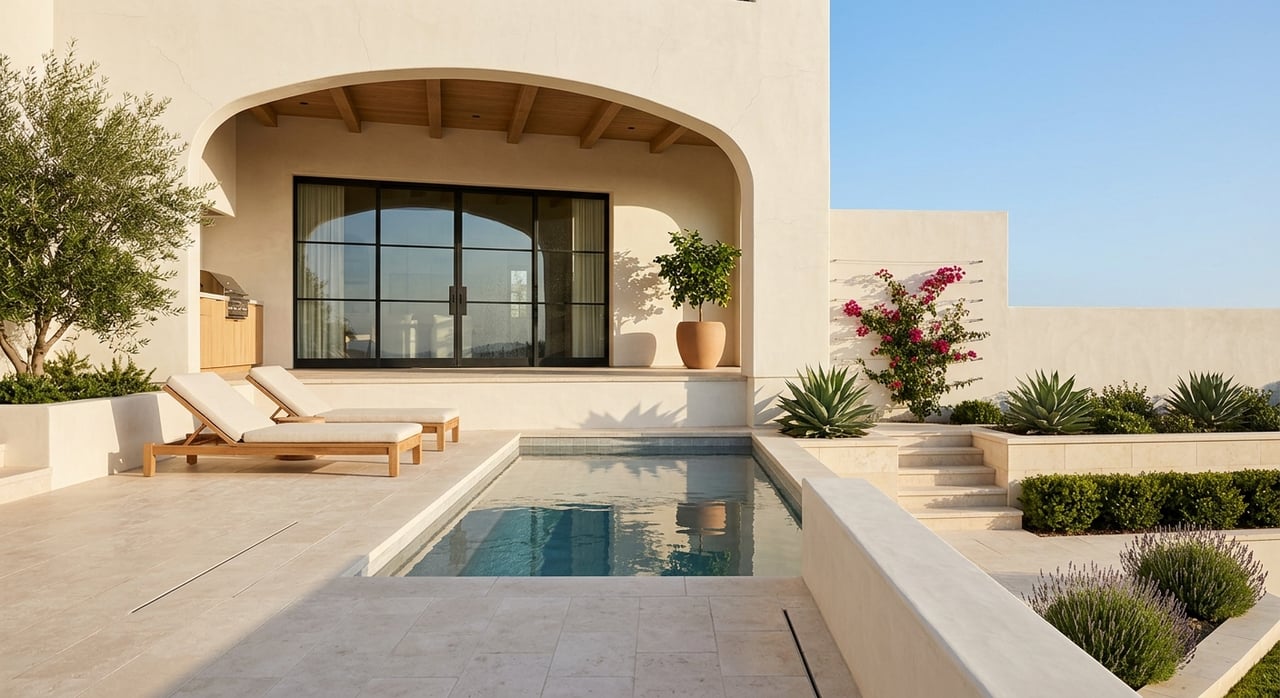
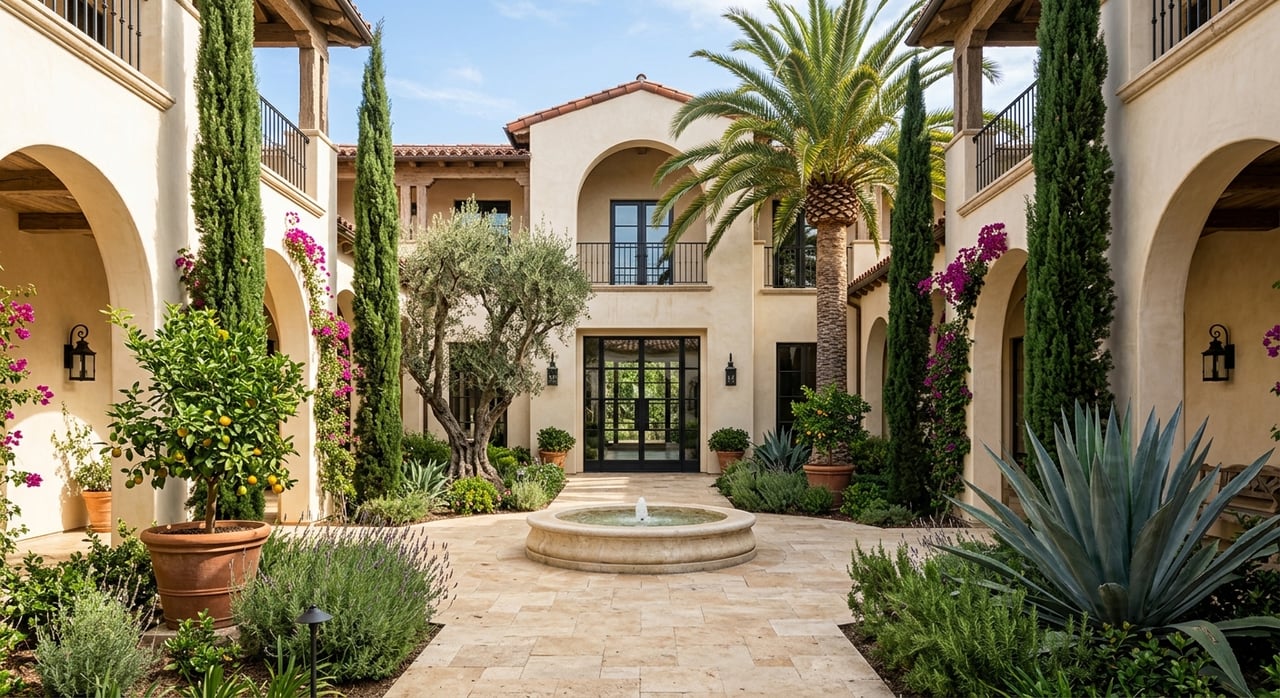
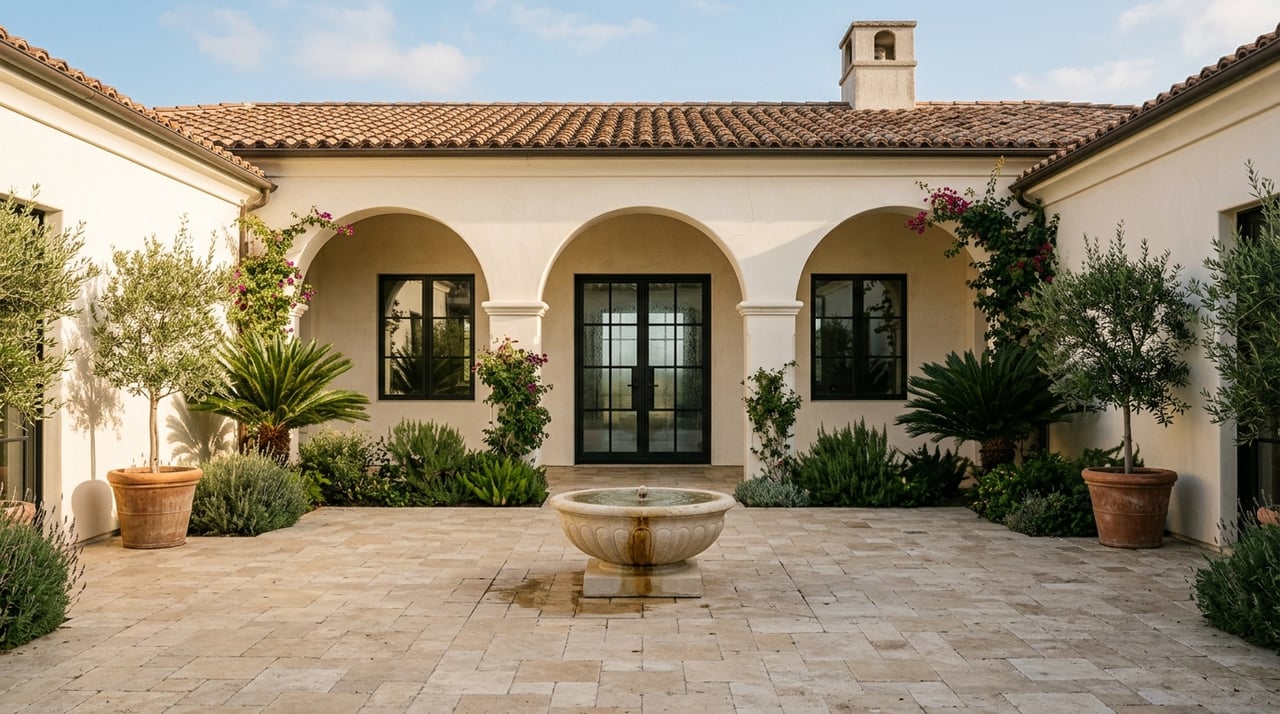
If one style feels especially connected to Southern California, it is Mediterranean and Spanish Revival architecture. The city’s Bel Air-Beverly Crest SurveyLA report identifies Spanish Colonial Revival and Mediterranean Revival as central to Bel Air’s early residential identity.
These homes often include stucco exteriors, clay tile roofs, arched openings, courtyards, patios, loggias, and decorative ironwork. The citywide Mediterranean and Indigenous Revival context statement outlines how these features create an architecture that is both visually rich and closely tied to climate.
Spanish and Mediterranean homes often feel naturally suited to Bel Air’s indoor-outdoor lifestyle. Courtyards, terraces, pools, and garden rooms can become central parts of daily living rather than secondary amenities.
For many buyers, this style strikes a balance between elegance and warmth. It can feel grand without being overly formal, and it often brings a softer regional character than more rigid traditional estates.
With these homes, maintenance often centers on stucco, clay tile roofing, ironwork, and drainage around outdoor living areas. Those are practical considerations worth reviewing carefully, especially on hillside lots or properties with extensive terraces.
If your goal is a house that feels distinctly Californian, this category is often the best match. It blends luxury with outdoor livability in a way that has remained highly relevant in Bel Air.
Not every notable Bel Air home is grandly formal or sharply modern. Ranch houses are an important part of the neighborhood’s postwar development, especially in the western and northern portions of the broader survey area, according to the SurveyLA report.
The city’s Ranch House context statement describes these homes as low and sprawling, often with low-pitched roofs, broad eaves, and large picture windows. In Bel Air, ranch-derived homes can offer a more understated kind of luxury.
Ranch homes often feel easy to live in. Their circulation tends to be more relaxed, and the connection between indoor and outdoor spaces can be stronger than in more formal estate plans.
They can also be highly adaptable. If a lot has excellent orientation, privacy, and original proportions, a ranch home may offer a compelling renovation opportunity without losing the qualities that made it attractive in the first place.
Bel Air’s modern houses are some of its most distinctive. The SurveyLA report identifies significant Mid-Century Modern residences by architects such as Frank Lloyd Wright Jr., Craig Ellwood, Richard Neutra, and Richard Dorman, with many homes oriented to maximize rear views.
A strong example is Case Study House #16, built at 1811 Bel Air Road. It uses steel, glass, and concrete and was designed to capture south and west views from its hillside setting.
Mid-century and contemporary homes in Bel Air usually focus on openness, light, and connection to the landscape. You will often see expansive glazing, clean lines, terraces, and careful siting that makes the view part of the home’s daily experience.
Current luxury contemporary homes build on that same idea. For example, Bel Air Vista on Archinect highlights features such as panoramic views, cantilevers, extensive glass, and terraced outdoor areas. In Bel Air, contemporary design is often less about minimalism alone and more about how architecture responds to privacy, terrain, and outlook.
Modern homes can be stunning, but they may involve more technical maintenance. Large glass walls, flat or low-slope roofs, terraces, and hillside drainage systems all deserve close attention.
For long-term appeal, the strongest modern homes are usually the ones where site and design work together. In Bel Air, a beautiful house and a beautiful lot are most powerful when they feel inseparable.
When you are touring homes in Bel Air, it helps to look beyond appearance and think about how each style supports your day-to-day life. Architecture can shape privacy, entertaining, maintenance, and even how the home feels at different times of day.
Here is a simple way to compare the main categories:
The best choice is not about which style is objectively better. It is about which one best fits how you want to live, how much upkeep you want to manage, and how well the home responds to Bel Air’s hillside landscape.
In Bel Air, long-term appeal often comes from homes that stay true to their architectural logic. A highly intact 1930s estate, a thoughtfully preserved mid-century house, or a well-executed contemporary residence can all be compelling if the design, materials, and site are working in harmony.
That is why architecture should be part of your buying strategy, not just your inspiration folder. When you understand the style, you can better evaluate layout, maintenance, renovation potential, and how the property may hold its appeal over time.
If you are considering a Bel Air home and want thoughtful guidance on style, positioning, and fit, Brianna Deutsch offers discreet, polished support tailored to Los Angeles luxury buyers.
Stay up to date on the latest real estate trends.
Whether acquiring a landmark estate or preparing to present your property to the global market, Brianna Deutsch provides the expertise, loyalty, and discretion required to navigate Beverly Hills real estate at the highest level.