The Sherman Oaks Premium Is Actually Three Premiums, and Only One of Them Is Land
September 17, 2026
September 17, 2026
Ask a contractor who works the hillside streets in Sherman Oaks about the call that comes a few weeks after closing, and the story is usually the same. A new owner is holding a topographic survey, comparing it to the listing sheet, and asking why the numbers don't match. The lot was 10,000 square feet on paper. The buildable, usable portion, once slope bands and setbacks are drawn in, is closer to a third of that. Nobody misrepresented anything. The buyer paid for privacy, elevation, and an address south of Ventura Boulevard, and got exactly that. What they often didn't realize they weren't buying was a yard.
That gap explains more about pricing in this neighborhood than any single median number circulating right now. Sherman Oaks gets talked about as if it carries one premium: south of the boulevard costs more than north of it. In practice, that price difference is three separate things stacked into one line on a listing sheet, and treating them as one number is how buyers end up paying for land they can't use, or missing a cheaper path to something they actually want.
As of September 2026, Sherman Oaks listings carried a median price around $1.52 million and roughly $707 a square foot, with the typical listing spending 62 days on market before going pending. That's the figure a portal search surfaces, and it gets treated as the neighborhood's price. It isn't. It's an average of two different products that happen to share a ZIP code.
Split the hillside core out from the rest of the neighborhood and the picture pulls apart. In the 91403 pocket covering the hillside streets south of the boulevard, price per square foot ran close to $800 in a late June 2026 snapshot, against roughly $729 for the broader neighborhood in a March 2026 read. A $70 to $80 per square foot spread on comparable square footage isn't rounding error. It's the market pricing two different products under one neighborhood name: a house, and a house plus a specific kind of land.
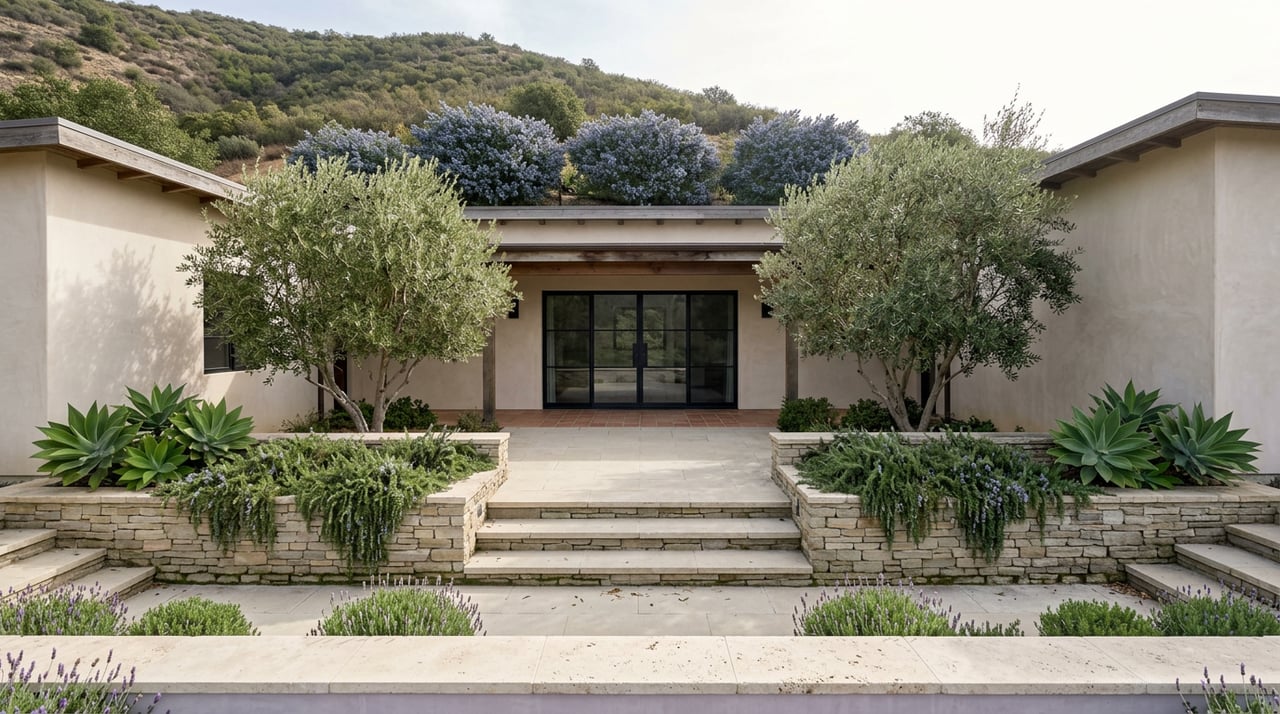
South of the boulevard, close to 80 percent of the terrain sits in ridgeline or canyon topography feeding into the Santa Monica Mountains. That's the appealing half of the premium: privacy, elevation, a view that doesn't exist on the flats. It's also where the math gets complicated. Hillside development comes with slope band analysis, required drainage and retaining wall work, and grading limits that apply before an owner can touch dirt outside the existing footprint. A 10,000 square foot upslope lot routinely nets down to something closer to 3,000 square feet of land a family can actually stand on, plant, or fence in. The rest is slope, easement, or structural buffer.
None of that shows up in a listing's lot size field. It shows up on a topo survey, in a conversation with a civil engineer, or in the moment an owner tries to add a pool and learns the flat pad they thought they had is smaller than a primary bedroom.
| South of the Boulevard | North of the Boulevard | |
|---|---|---|
| Typical terrain | Upslope, ridgeline or canyon, often 80% slope | Flat, standard 1930s-40s lots near 6,750 sq ft |
| Entry pricing | Roughly $2M and up | Roughly $1.2M to $1.3M |
| What the premium buys | Privacy, elevation, view | Larger, fully usable flat lot |
| Land caveat | Slope bands can cut usable land by two-thirds | Minimal grading restriction |
| Financing lever | Little flat pad for a second structure | Detached ADU potential, renting $2,200 to $3,000 a month |
A second premium gets folded into the same "south of the boulevard" shorthand, and it has nothing to do with slope. Homes zoned into the Dixie Canyon Community Charter attendance area sell for $50,000 to $100,000 more than comparable homes just outside that boundary, a gap consistent enough in sold data that agents treat it as its own line item separate from the hillside premium. Dixie Canyon's boundary doesn't track the elevation line exactly. A flatter block inside the zone can carry the school premium without carrying a slope premium at all. A hillside block just outside the zone can carry the reverse. Buyers who assume "south of the boulevard" and "strong school zone" are the same purchase are paying for two different things and often only asking about one.
The flats north of Ventura aren't competing on view or elevation, and they aren't trying to. What they offer is land that behaves the way the lot size on paper says it should: flat, buildable, and in many cases wide enough for a detached accessory dwelling unit. That matters past lifestyle. A detached ADU in Sherman Oaks rents for roughly $2,200 to $3,000 a month, and buyers who can document that income are using it to qualify for a larger loan than the base purchase price would otherwise support. It's a financing tool the hillside product can't offer at the same scale, since slope-heavy lots leave little flat pad to build a second structure on in the first place.
Put the mechanisms together and September 2026 looks less like one market cooling than two markets moving on different clocks. Well-prepared homes in the premium hillside pockets, priced to current comps, were still going under contract in 14 to 21 days as of Q2 2026 tracking. Homes anywhere in the neighborhood still priced to 2022 peak values were sitting 45 to 60 days before sellers adjusted. That spread isn't a north-south story. It's about whether a seller on either side of Ventura is charging for what the property actually delivers or for what a comparable sold for four years ago.
For a buyer, the useful move is asking three separate questions before writing an offer: how much of this specific lot is genuinely usable once slope and setback are accounted for, is the school zone premium riding along for a reason that has nothing to do with the hill, and would a flat lot with ADU potential get closer to the actual goal for meaningfully less money. Sherman Oaks will answer those three questions differently block by block, and sometimes differently on the same block.
Is the south-of-the-boulevard premium the same everywhere along that line? No. The ZIPs that cover this stretch blur more than they clarify. 91403 covers the central and southern hillside core, 91423 stretches east toward the Studio City line with its own mix of hillside and flat product, and the northern edge tips into flatland pricing before the 101. Two addresses both labeled "south of the boulevard" can sit on completely different terrain.
Can a buyer get the Dixie Canyon school premium without paying the full hillside land premium? On some blocks, yes. The attendance boundary and the slope line aren't the same shape, so a flatter street inside the zone can carry the school value without the usable-land discount that comes with a steep lot.
Does ADU income actually close the gap with hillside pricing? It narrows the financing gap more than it narrows the lifestyle gap. Rental income from a detached unit can help a buyer qualify for a larger loan, but it doesn't replicate the privacy or view that the hillside premium is actually pricing in. The two products are solving different problems.
Sherman Oaks rewards buyers who separate these premiums before they tour, not after they've already fallen for a view. If you're weighing a hillside lot against a flat one, or trying to figure out which side of a school boundary actually matters for the block you're considering, Brianna Estates can walk the comps and the topo maps with you before you write an offer. Let's Connect.
Stay up to date on the latest real estate trends.

Whether acquiring a landmark estate or preparing to present your property to the global market, Brianna Deutsch provides the expertise, loyalty, and discretion required to navigate Beverly Hills real estate at the highest level.