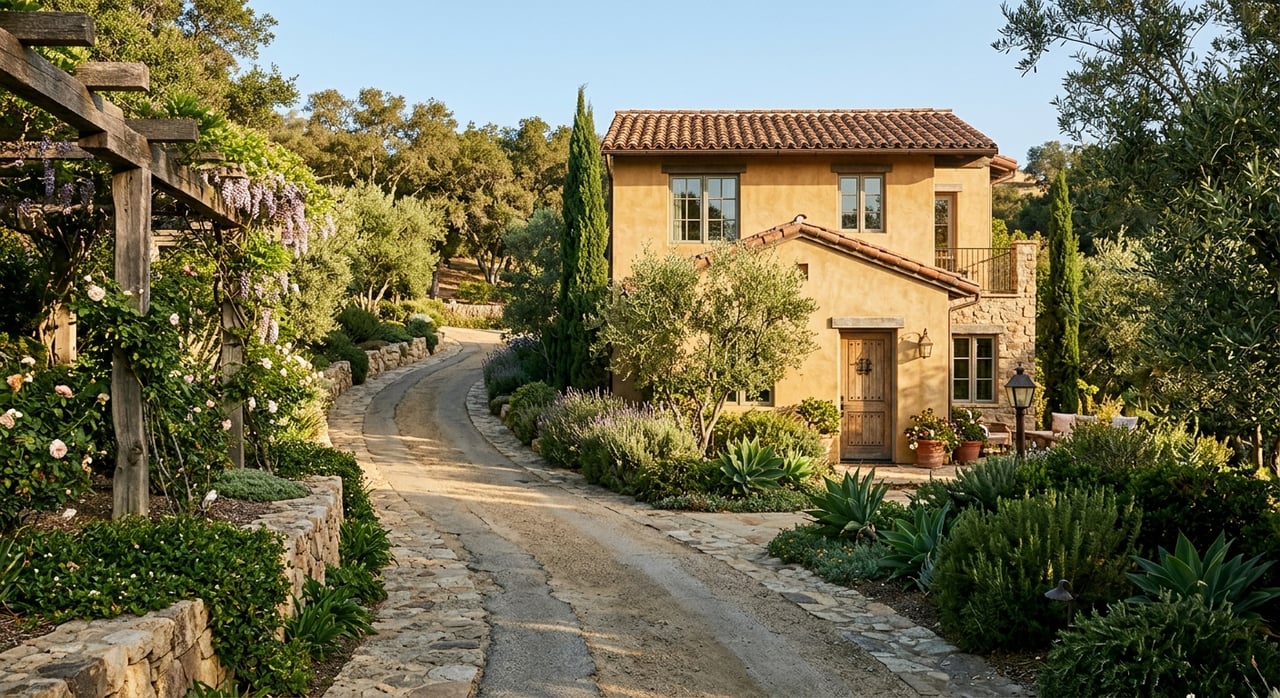
What To Know Before Buying A Home In Arcadia
June 11, 2026
June 11, 2026
Buying in Arcadia can look straightforward at first glance, then get much more nuanced once you start comparing streets, lot sizes, and price points. If you are weighing a move here, you are likely trying to understand not just what homes cost, but how to judge value in a market with meaningful variation. This guide will help you understand Arcadia’s market position, housing mix, daily-life factors, and the details worth verifying before you write an offer. Let’s dive in.
Arcadia is a midsize San Gabriel Valley city with an estimated population of 54,117 as of July 2025. Census data also shows a 58.1% owner-occupied housing rate and a median owner-occupied home value of $1,441,800. That places Arcadia above several nearby cities on value, while still below San Marino at the top end of the local market.
For buyers, that means you are shopping in a market that commands strong pricing but is not identical from block to block. Arcadia is not simply “expensive” in a general sense. It is a city where pricing, lot characteristics, and property condition can shift noticeably within a relatively small area.
Compared with Pasadena, Temple City, Monrovia, and Glendale, Arcadia’s median owner-occupied housing value is higher. That premium reflects its established reputation, housing stock, and amenity base. At the same time, it remains below San Marino’s reported $2,000,000-plus median owner-occupied housing value.
This middle-to-upper position matters because it gives buyers an important benchmark. If you are comparing homes across the San Gabriel Valley, Arcadia often sits in the conversation for buyers who want a premium market without necessarily reaching the highest local price tier.
Recent market snapshots all point in the same direction. Arcadia is active, high-value, and competitive, but not so compressed that every property behaves the same way. Different data sources measured the market differently through spring 2026, yet the broad picture stayed consistent.
Redfin reported a three-month median sale price of $1,549,200 and about 57 days on market through April 2026. Zillow reported an average home value of $1,420,654, a median sale price of $1,443,833, 20 days to pending, and 143 homes for sale as of April 30, 2026. Realtor.com reported a March 2026 median listing price of $1,688,000, 158 homes for sale, a median 54 days on market, and homes selling at about 99% of asking price.
The practical takeaway is that Arcadia can still offer room for negotiation, but not on every home. A well-positioned property may move quickly, while another may sit longer based on pricing, condition, or location within the city. You need to evaluate each listing in context rather than assuming one citywide rule applies to all of them.
That is especially important in a market where list price, sale price, and time on market can vary based on micro-location. In Arcadia, broad averages are useful, but they should not replace property-level analysis.
One of the most important things to know before buying a home in Arcadia is that the city is not priced uniformly. Realtor.com’s March 2026 snapshot showed a median listing price of $2.05 million in ZIP code 91007, compared with $1.45 million in 91006. That is a meaningful gap within the same city.
For you as a buyer, this means the Arcadia name alone does not tell the full story. Two homes with similar square footage may feel very different in value once you account for ZIP code, lot size, street character, updates, and location relative to major amenities and commercial corridors.
In practical terms, micro-location can shape more than price. It can influence lot dimensions, redevelopment potential, traffic patterns, and how a property fits your daily routine. If you are narrowing your search, it helps to compare specific pockets rather than relying on citywide averages.
This is where a measured, street-by-street review becomes more valuable than a fast online scan. In a city like Arcadia, subtle differences often have real financial consequences.
Arcadia is often associated with single-family homes, and that remains true overall. SCAG reports that 60.9% of the city’s housing stock is single-family detached, with another 10.1% in single-family attached homes. It also reports 6.0% in two-to-four-unit buildings and 23.0% in five-plus-unit buildings.
That mix tells you Arcadia is not a one-format market. Depending on your budget, lifestyle, and goals, you may come across detached homes, townhomes, condos, and multifamily-adjacent options, especially near more commercial areas. This can create flexibility for buyers who want the Arcadia location but are open to different property types.
SCAG also reports that 58.2% of Arcadia’s housing stock was built before 1970. That does not mean older homes are a drawback. It does mean the details matter.
Many buyers are drawn to the lot sizes, established streetscapes, and remodel potential that older housing stock can offer. Still, when you are considering an older home, inspections and permit-history review become especially important because systems, additions, and renovations may have changed over time.
Arcadia’s official zoning map shows multiple residential districts, including first- and second-one-family districts and a residential mountainous district. It also includes overlay zones such as architectural design, special height, parking, downtown, and racetrack event overlays. In addition, minimum lot sizes range roughly from 5,000 square feet to 30,000 square feet across different residential areas.
That matters because Arcadia is not a uniform tract-home environment. If you are thinking about future additions, an ADU, a significant remodel, or a long-term rebuild strategy, zoning should be reviewed early. Lot size, setbacks, and overlay requirements can differ more than buyers expect.
Before you get too attached to a property, it helps to ask a few practical questions:
A home can look ideal today, but your future options may depend on rules that are not obvious during a first showing.
A home search is never just about the house. In Arcadia, daily-life convenience is part of what buyers are paying for. The city says it has 14 city parks, 4 facilities, and several joint-use facilities with the Arcadia Unified School District.
Two of the most recognizable destinations are the 127-acre Los Angeles County Arboretum and Botanic Garden at 301 North Baldwin Avenue and Santa Anita Park at 285 West Huntington Drive. The city also notes that Arcadia Community Regional Park at Huntington and Santa Anita is operated by Los Angeles County, and city parks are open from 7 a.m. to 10 p.m.
Santa Anita Park’s directions show access from the 210 Freeway via Baldwin Avenue, which helps explain why this part of Arcadia functions as both a local amenity area and a regional destination. If you are evaluating a specific property, it is worth considering how close you want to be to major attractions, commercial areas, and freeway routes.
For some buyers, proximity is a plus. For others, a quieter position within the city may be more appealing. Neither is universally better. It depends on how you want your home to support your routine.
Arcadia Unified is a major part of the local housing conversation. The district says it serves about 9,500 students across 11 schools, all located in Arcadia. But the district also says its boundary maps are only a general guideline and recommends verifying an address through Los Angeles County’s district and precinct lookup or by contacting the district directly.
That is one of the most important details to confirm before buying. You should never assume that a home’s city location automatically determines a specific school assignment. Boundary verification should happen by exact address, not by impression or marketing language.
Arcadia is also fairly car-oriented. SCAG reports that 69.9% of households own two or more vehicles, and 48.8% of commuters spend more than 30 minutes traveling to work. Those numbers make practical features more important than they may seem in listing photos.
When you tour homes, pay attention to garage size, driveway layout, street parking, and how easy it is to get in and out during busy times. Commute and parking logistics may not be the most glamorous part of the search, but they can shape your day-to-day satisfaction with a property.
If you want to approach Arcadia with clarity, focus on the factors that most often affect value and long-term fit.
A careful process can help you avoid surprises and make a more confident decision. In a layered market like Arcadia, diligence is not overthinking. It is part of buying well.
If you are considering a move to Arcadia, the right guidance can make the search feel much more focused. For tailored insight and discreet representation, connect with Brianna Deutsch.
Stay up to date on the latest real estate trends.
Whether acquiring a landmark estate or preparing to present your property to the global market, Brianna Deutsch provides the expertise, loyalty, and discretion required to navigate Beverly Hills real estate at the highest level.